
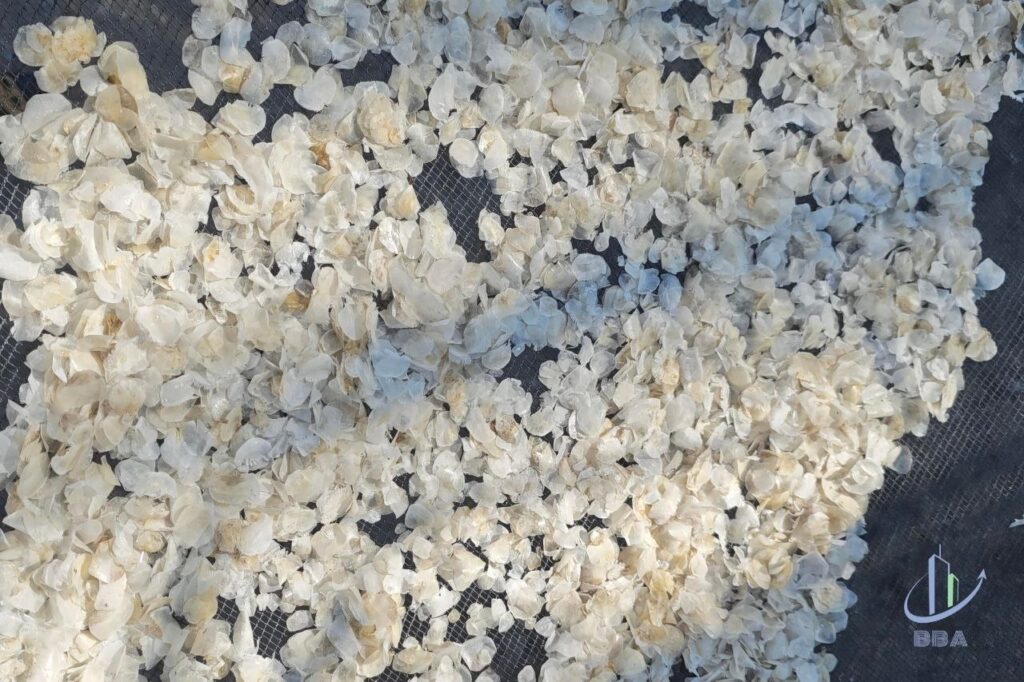
From Fish Processing By-Product to Valuable Sustainable Raw Material
Tilapia fish scales processing transforms fish processing by-products into valuable raw materials for collagen, biotechnology, cosmetics, and other industrial applications. Through proper collection, cleaning, drying, and packaging, high-quality tilapia fish scales can meet international standards for research and industrial use.
Tilapia (Oreochromis niloticus) is one of the most widely farmed freshwater fish species in the world. As global seafood consumption continues to increase, fish processing industries generate significant quantities of by-products, including fish scales.
For many years, fish scales were considered processing waste. Today, however, they are recognized as a valuable natural resource because they contain collagen-rich structures that can be utilized in various industries. With proper handling and processing, tilapia fish scales can become sustainable raw materials for collagen production, biotechnology, cosmetics, scientific research, and other industrial applications.
The utilization of fish scales not only creates additional economic value but also supports environmentally responsible manufacturing and the circular economy by reducing waste from seafood processing.
Tilapia Fish Scales Processing: Responsible Collection
The processing journey begins at professional fish processing facilities where fresh tilapia are prepared for food distribution. During the scaling process, fish scales are carefully collected using hygienic handling procedures to preserve their natural quality.
After collection, the scales undergo an initial inspection to remove unwanted materials such as remaining fish tissue, blood residues, dirt, and other foreign particles. Careful collection at this early stage is essential because the quality of the final product depends on the condition of the raw material.
Responsible collection practices also help improve traceability and ensure that the fish scales are suitable for industrial processing.
Tilapia Fish Scales Processing: Sorting and Quality Control
Once collected, the fish scales are sorted according to quality standards. This stage ensures that only suitable raw materials continue through the processing line.
During quality control, the scales are evaluated based on:
- Cleanliness
- Physical condition
- Size consistency
- Natural appearance
- Freedom from foreign contaminants
A strict quality control process helps maintain product consistency and provides reliable raw materials for industrial customers worldwide.
Tilapia Fish Scales Processing: Washing and CleaningWashing and Cleaning Process
Selected tilapia fish scales are thoroughly washed using a multi-stage cleaning process designed to remove remaining organic residues and impurities.
Scientific research has shown that proper cleaning and pretreatment are important steps before fish scales are utilized for collagen extraction and other industrial purposes. Effective cleaning improves material purity while reducing contamination risks during storage and transportation.
The washing process contributes to:
- Cleaner raw materials
- Better product stability
- Improved processing efficiency
- Reduced contamination risk
- Higher overall product quality
Tilapia Fish Scales Processing: Controlled Drying Process
After washing, the fish scales undergo a controlled drying process to reduce moisture content while maintaining their natural characteristics.
Proper drying is essential because excessive moisture can reduce storage stability and encourage microbial growth. Controlled drying also helps maintain product quality during long-distance international shipping.
Well-processed tilapia fish scales generally feature:
- Stable moisture content
- Clean appearance
- Natural color preservation
- Low odor
- Improved shelf life
- Better durability during transportation
Maintaining appropriate moisture levels is particularly important for export-quality raw materials.
Packaging and Export Preparation
Once the drying process is complete, the fish scales are carefully packaged using export-grade packaging systems to protect product quality throughout storage and international transportation.
Packaging options may include:
- PE inner liner bags
- Vacuum packaging
- Export-grade woven sacks
- Palletized packaging for container shipment
Proper packaging protects the product from moisture absorption, dust contamination, physical damage, and external environmental exposure. Each shipment can also include product identification and quality information to support traceability.
Applications of Tilapia Fish Scales
Tilapia fish scales have attracted increasing attention because they naturally contain Type I collagen, making them valuable for numerous industrial and scientific applications.
Collagen Production
Fish scales serve as a sustainable raw material for collagen extraction. Type I collagen derived from tilapia has been widely studied due to its potential use in food, biomedical, and industrial applications.
Biotechnology and Biomedical Research
Researchers continue to investigate fish scale-derived collagen for biomaterials, tissue engineering, regenerative medicine, and various scientific studies.
Cosmetic Industry
Collagen obtained from fish scales is increasingly researched as an ingredient for skincare and cosmetic products because of its natural origin and sustainability.
Sustainable Industrial Raw Materials
Utilizing fish processing by-products helps reduce waste while supporting environmentally responsible production systems. This approach allows industries to maximize the value of natural resources while minimizing environmental impact.
Our Processing Standard
As an Indonesian supplier of premium tilapia fish scales, we are committed to maintaining consistent quality throughout every stage of production.
Our processing standards include:
- Raw Material: 100% Premium Tilapia Fish Scales
- Cleaning: Multi-stage washing process
- Drying: Controlled drying process
- Moisture: Below 15%
- Packaging: Vacuum PE packaging or export-grade packaging
- Application: Research and industrial raw materials
Every batch is processed with careful quality control to ensure clean, stable, and reliable products for international buyers.
Sustainable Value from Seafood By-Products
The growing utilization of tilapia fish scales demonstrates how seafood processing by-products can be transformed into valuable industrial resources.
By implementing responsible collection, careful sorting, effective cleaning, controlled drying, and export-grade packaging, tilapia fish scales become reliable raw materials suitable for global industries. This sustainable approach not only improves resource efficiency but also supports waste reduction and the transition toward a circular economy.
As demand for sustainable collagen sources and environmentally responsible materials continues to increase, properly processed tilapia fish scales offer an attractive solution for manufacturers, researchers, and industrial users around the world.
Scientific References
- Chen, J., Li, L., Yi, R., Xu, N., Gao, R., & Hong, B. Extraction and Characterization of Acid-Soluble Collagen from Scales and Skin of Tilapia (Oreochromis niloticus). LWT – Food Science and Technology.
- Romadhon, Y., Sastro Darmanto, & Kurniasih, R. A. The Characteristics of Collagen from Tilapia (Oreochromis niloticus) By-products. Jurnal Pengolahan Hasil Perikanan Indonesia.
- Pertiwi, R. M., Nurilmala, M., Nurjanah, & Nurhayati, T. Characteristics of Red Tilapia Fish Scales as Raw Materials for the Collagen Industry. Jurnal Pengolahan Hasil Perikanan Indonesia.